Why Enlightenment Is the Greatest Journey a Human Being Can Take
“Someone who’s awake is basically a nothing. And that’s the freedom.”
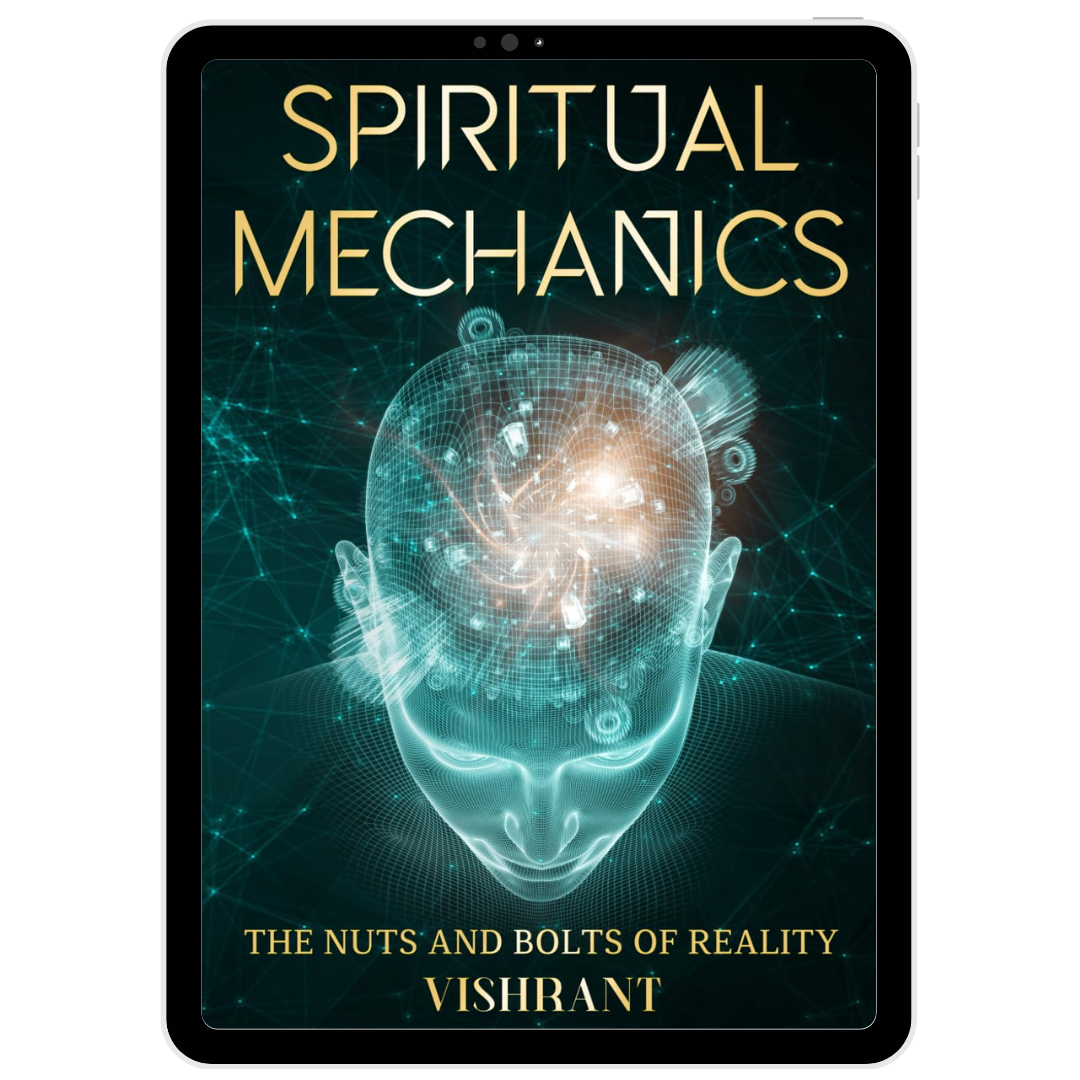
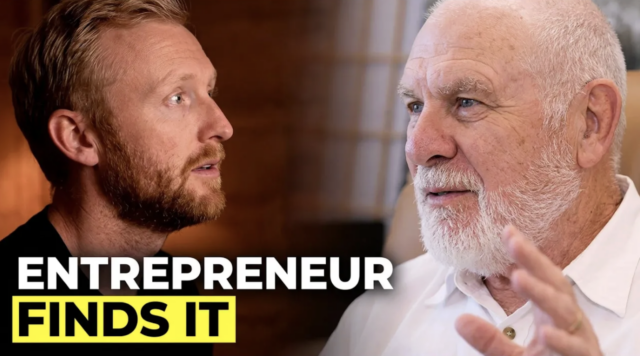
Most people spend their lives building something. A career. A reputation. An identity. Layer after layer of who they believe themselves to be, carefully constructed and fiercely defended. But what if the greatest adventure a human being can ever take is not about building anything at all? In this Satsang, Vishrant speaks about the ultimate journey, the one that leads not to more, but to less. Not to becoming someone greater, but to discovering you were never the someone you believed yourself to be in the first place. He shares the path that led to his own awakening, the practical steps of raising consciousness, and why the only thing standing between you and freedom, is you.
Watch YouTube excerpt here:
What Does It Actually Mean to Wake Up Spiritually?
The ultimate adventure for a human being is to wake up. Not wake up in the way we use that phrase casually. Not becoming more informed or more aware of current events. Waking up in the deepest sense means knowing yourself as beingness instead of knowing yourself as an “I”. This is a distinction most people have never considered. The difference between the two is enormous. When you know yourself as an “I”, there is identification. You think you are the one. You think you are your thoughts, your history, your name, your story. When you know yourself as beingness, that identification falls away completely. Someone who is awake is basically a nothing. And that nothing is not empty. It is free. Nothing really bothers it. It is free from the “I”. Free from the mind. Free from the endless machinery of thought that most people are trapped inside without ever realising they are trapped.
Can You Go Straight to Enlightenment Without Raising Your Consciousness First?
One of the most important things Vishrant addresses in this Satsang is something many spiritual seekers don’t want to hear. You cannot go straight from lower consciousness to enlightenment. Glimpses are possible; ongoing enlightenment is not possible. There is a journey involved. Consciousness levels need to be raised, and that raising happens gradually, through real effort and practice, not through shortcuts or wishful thinking. Vishrant can only speak from his own history, and that history began at the age of nineteen when he started doing encounter groups. Personal growth groups where other people would tell you what they could see about you. The teacher would share what he or she observed. Other participants would do the same. And most of the time, they got it wrong. But Vishrant was not interested in the ninety percent they got wrong. He was interested in the ten percent they got right. Because that ten percent was information about how his own mind was working, information he could not see from the inside. He was not into defending himself against the people who missed the mark. He was into thanking them for what they caught. This is the correct attitude for anyone who wants to grow. Feedback, even imperfect feedback, is one of the few ways to see past the blind spots of your own mind.
Is Your Own Mind the Thing Blocking Your Spiritual Growth?
This is the part that most people find confronting. Your own mind is the thing that creates the obstacles that are in the way of love, in the way of higher consciousness, in the way of enlightenment. In other words, you create the problems. Not life. Not circumstances. Not other people. You! The very mind that is trying to figure out how to get free is the same mind that built the prison. And until a person can see this clearly, no amount of reading, studying, or collecting spiritual knowledge will change anything.
What Is the Difference Between Witnessing and Analysing Your Mind?
There are two ways Vishrant discovered to begin seeing past the mind’s defenses. The first is feedback from others, teachers, honest friends, or people in a growth-oriented community who can reflect back what you cannot see yourself. The second is the silent witness. At fourteen years old, Vishrant developed a role inside himself that could watch his mind without judgement. Not analysing. Not interpreting. Simply watching. This distinction is critical. Most people analyse their minds. They think about their thinking. They try to figure out why they feel a certain way or why they behave in certain patterns. But analysing the mind is dreaming. And the mind does not show itself to you properly when you are analysing it, because the mind is, as Vishrant puts it, a bullshitter. It tells itself lies to support its beliefs.
Witnessing is entirely different. When you watch the mind from a non-judgmental place, you can later go back and examine what you witnessed and see the truth. But there is a catch. And it is a big one. You must be ruthlessly honest with yourself to play this game. If you let yourself get away with self-deception, it does not work. You can deceive the world if you choose to. But you cannot deceive yourself and expect to grow. You have to be straight with yourself. Always. When that ruthless honesty is in place, things become visible. You can start to see what needs to happen. You start to see what is in the way which gives you the possibility to change it.
This is the methodology taught by Bhagwan Shree Rajneesh, the witnessing of the mind, and Vishrant considers it brilliant. But we were not programmed for it. We were programmed to analyse. We went to school for twelve years and were taught how to solve problems. And most people do that until the day they die, living in their heads in an artificial world, solving problems, thinking that somehow that is living. That is not living. That is existing in a pain machine.
What Happens When You Experience Reality Without Thought?
There is another way to be in this world. It is brilliant to be here without a thought. Just here. Listening. Watching. Feeling. Touching. Tasting. Smelling. Without a single thought. It is beautiful. But we were programmed to name everything. To analyse everything. And therein lies the problem because all of that naming and analysing is dreaming. It is not real. Reality, when it is actually experienced directly, without the overlay of thought, is quite beautiful. Most people never discover this because they never stop thinking long enough to notice what is actually here.
What Is the Difference Between Unconditional Love and Primal Bonding?
From the beauty of presence, Vishrant moves to the subject he considers the most important of all. Love. Most people think they love but according to Vishrant, they don’t, not really, because they are too closed, too defended and closure and defensiveness stop a person from experiencing real love. What most people experience instead is primal bonding. The connection with family. The connection with a partner. The connection with children. These bonds feel powerful and they are often mistaken for love. But primal bonding is a program in the mind for survival of the species. It is not the same thing as unconditional love. Unconditional love is the most beautiful thing a human being can experience. Primal bonding and love can exist in the same room together. But quite often, they don’t. Love has one quality and one quality alone. It loves. It doesn’t get jealous. It doesn’t get possessive. It doesn’t talk to you. Some people think they can talk to their hearts, but that is the mind pretending to be the heart. Love simply loves. It has no other qualities. And learning to distinguish the difference between unconditional love and primal bonding matters deeply, because unconditional love is the only thing that is truly valuable here.
Why Did Vishrant Walk Away From a Successful Business to Find His Heart?
At the age of thirty-three, Vishrant experienced unconditional love for the first time. And in that moment, he realised he had been bankrupt for thirty-three years. He had been extremely successful in the business world. By every external measure, he had made it. But without unconditional love, none of it meant anything. He was too closed, and too defended. He had cut himself off from the only thing worth having. And so he did something that most people would consider extraordinary. He gave his companies to his staff, took off his shoes, and walked around Australia barefoot for four years in search of his heart, in search of the only thing that is valuable here. This is why he teaches love as a way of life. Not as an abstract concept. Not as a philosophy. But as a lived experience that changes everything. And it is also the pathway to enlightenment. Because the same obstacles that are in the way of perceiving love are the same obstacles that are in the way of waking up.
Can a Spiritual Teacher Do the Inner Work For You?
Vishrant is direct about this. Only you can do the work on you. You can present yourself to a teacher. You can sit in a group. You can attend every Satsang available. But nobody can do this for you. A teacher can point out the direction. But you are the one who has to dismantle yourself. Reverse engineer yourself. Undo yourself. Vishrant undid himself. He reverse engineered his own mind until it fell silent. Not suppressed. Not controlled. Silent. His mind does not talk to itself even now. There is nothing wrong with the mind, he explains. It is a great tool. But it is a terrible boss. If you don’t have control over it, you are lost. Lost in dream. This is why every monastery and ashram in the world teaches meditation first. Because meditation is about reclaiming reality from the dream you have been lost in for so long. Meditation is simply being aware of what is real. Everything you see, everything you hear, everything you feel, everything you touch, everything you taste, everything you smell is real. Everything you think about it is not.
How Much Effort Does It Actually Take to Raise Your Consciousness?
This is the question Vishrant puts to everyone who sits with him. How free do you want to be? Because freedom takes effort. Any teacher who tells you it is easy is a liar. And more than likely, they have their hand in your back pocket on your wallet. It is hard to raise your consciousness levels. It is easy to stay in lower consciousness because that is just default patterning picked up through childhood. To raise your consciousness levels is a whole other game. And it is the best game in town. There is no better game. But it does take effort. It does not happen because you listen to a few lectures or read a few books. The collection of knowledge is actually a booby prize. What works is practice. And practice is up to you because no one can practice for you.
Why Does Real Spiritual Growth Require Removing Things, Not Gaining Them?
This is where Vishrant’s teaching becomes unlike most others. When people come to him with questions, he is not there to inform them. He is not there to give them anything. He is there to take things off them. If you were already free, there would be nothing to take off you. This is a fundamentally different approach. Most spiritual seekers are looking to acquire something, knowledge, experiences, and states of consciousness. But Vishrant’s work moves in the opposite direction. It is about removal. About letting go. About the willingness to release everything that stands between you and what you already are. You cannot hang on to anything and play this game at a high level. You cannot even hang on to an idea or an ideal. How free do you want to be? And what are you willing to pay for it? Not in money. In effort. Your effort.
What Is the Dark Night of the Soul and Why Does It Happen in Satsang?
There is something else happening in Satsang beyond words and questions. There is a Buddha field. This is an expanding energy field that Vishrant carries, and it changes people. It can expand the mind and begin to undo it to some degree. Which means that if you are carrying pain-bodies, unresolved emotional material stored in the system, that material may start to surface. You may begin to enter what is known as the “dark night of the soul”. This is not a failure. It is not a sign that something has gone wrong. It is the process working.
How Do You Begin the Work of Spiritual Awakening?
“How free do you want to be?”
What works is acceptance. What doesn’t work is resistance. This Satsang is not a set of instructions to be followed. It is not knowledge to be collected. It is an invitation to begin the most important work a human being can do. The work of dismantling what is in the way. The work of becoming ruthlessly honest. The work of learning to trust silence instead of thought, and openness instead of defense. It is up to you. Sit in Satsang with Vishrant and experience this for yourself. In the presence of the Buddha field, something begins to shift. When we stop clinging to who we think we are, something extraordinary is revealed. Freedom was never something to be found. It was always here, waiting beneath everything we were willing to let go.